Enterprise Intelligence Architecture
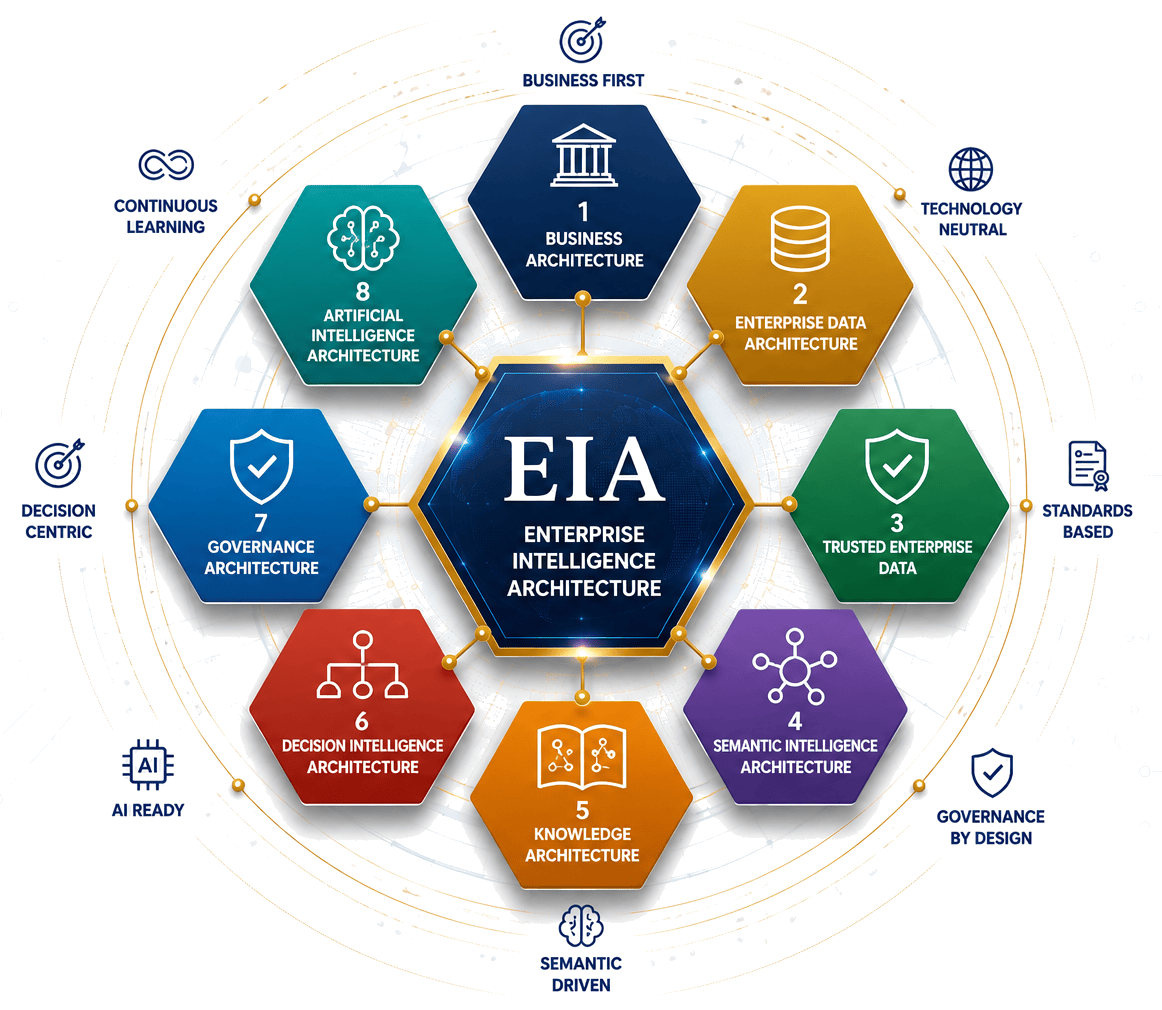
Enterprise Intelligence Architecture (EIA®) is a business-first, technology-neutral architecture discipline that integrates business strategy, trusted data, semantic intelligence, knowledge, decision intelligence, governance, and artificial intelligence into a unified architecture.
EIA enables organizations to make trusted, explainable, and continuously improving business decisions that create measurable enterprise value.
1. Why Enterprise Intelligence Architecture?
The world has moved beyond traditional Enterprise Architecture. Enterprises now require an architecture that not only aligns business and technology, but also governs data, semantics, knowledge, decisions, and artificial intelligence as interconnected disciplines.
EIA was created to unify these disciplines into a single business-first architecture so organizations can design, govern, and evolve intelligent enterprises with confidence.
2. Evolution of Enterprise Architecture
Architecture
and value creation
Architecture
with technology
Architecture
manages data
as an asset
Transformation
technology to transform
operations
Intelligence
human intelligence
Intelligence
Architecture
semantics, Knowledge,
decisions, governance
and AI
3. The Eight Enterprise Intelligence Domains
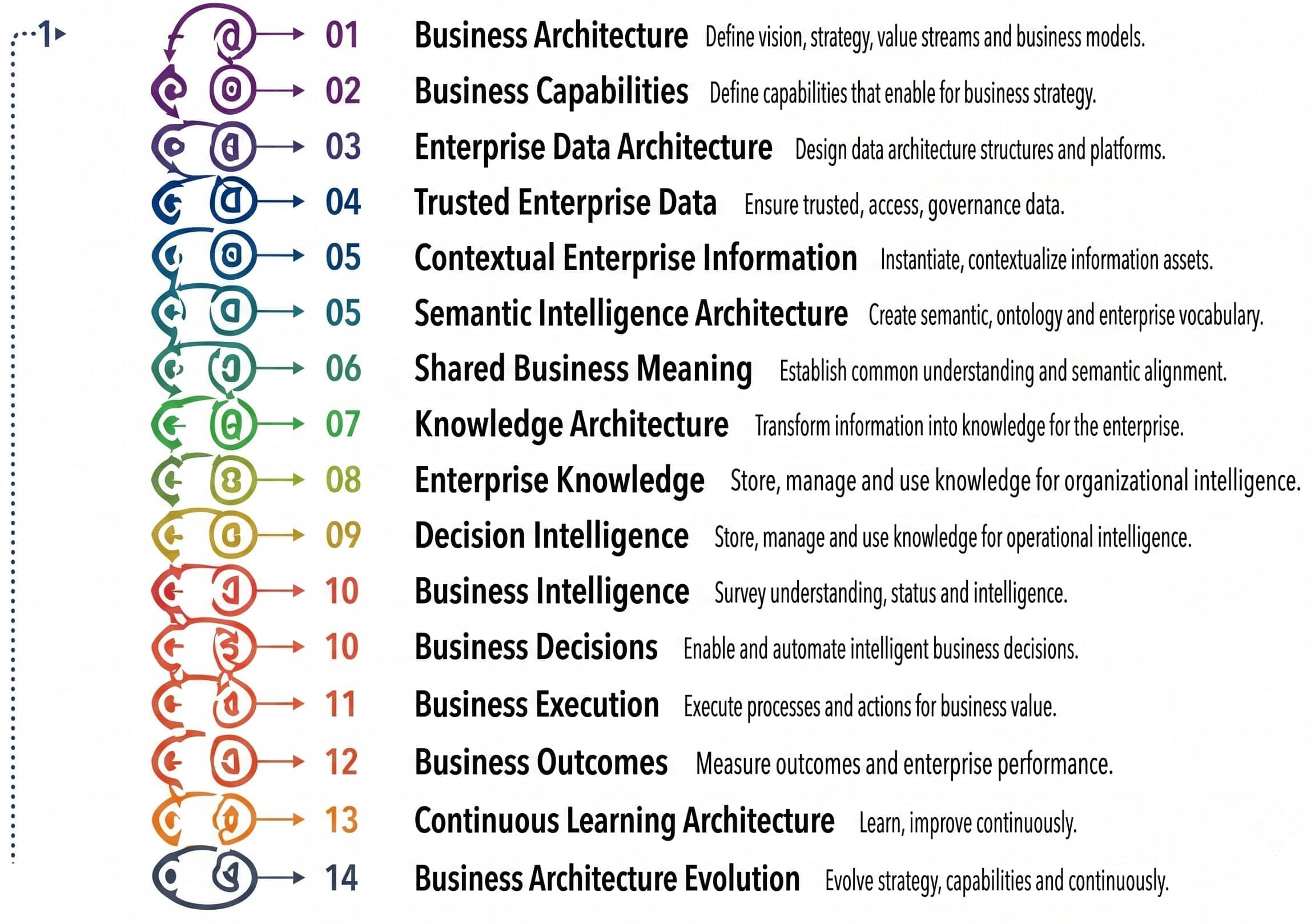
4. The Enterprise Intelligence Lifecycle – 14 Layers
5. Cross-Cutting Architectures
6. EIA Meta-Model Overview
7. Architectural Principles of EIA
8. Relationship to Existing Frameworks
| Framework | Primary Focus | Relationship to EIA |
|---|---|---|
| TOGAF® | Enterprise Architecture | EIA extends architectural scope into data, semantics, knowledge, decision intelligence, governance and AI. |
| Zachman® | Classification Schema | EIA can utilize classification concepts while providing lifecycle, methods and governance. |
| DAMA-DMBOK® | Data Management | EIA incorporates trusted data as one domain within broader architecture. |
| BABOK® | Business Analysis | EIA complements business analysis by providing enterprise-wide structures. |
| PMBOK® | Project Management | PMBOK governs delivery; EIA governs enterprise architecture. |
| EIA® Framework | Business-First Intelligence | Integrates strategy, data, semantics, knowledge, decisions, governance and AI. |
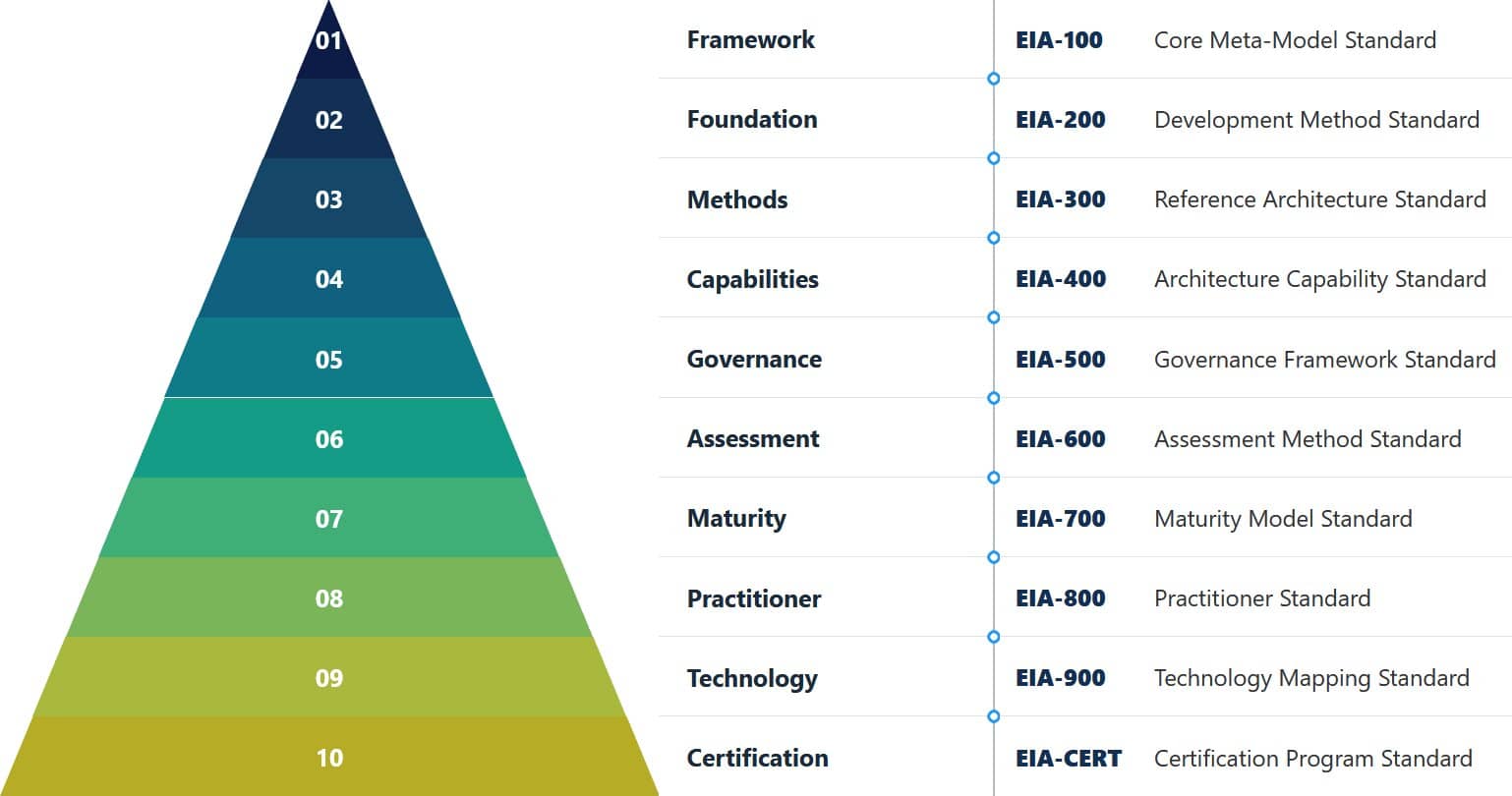
9. EIA Standards Ecosystem